Intro
Preparing for a SOC audit is often more challenging than companies initially expect. Many organizations focus heavily on the audit itself while underestimating the importance of readiness, documentation, and internal processes beforehand. SOC engagements are commonly evaluated against standards developed by the AICPA Trust Services Criteria, which provide the foundation for assessing security and operational controls.
The result is often unnecessary delays, confusion, weak evidence collection, and avoidable findings.
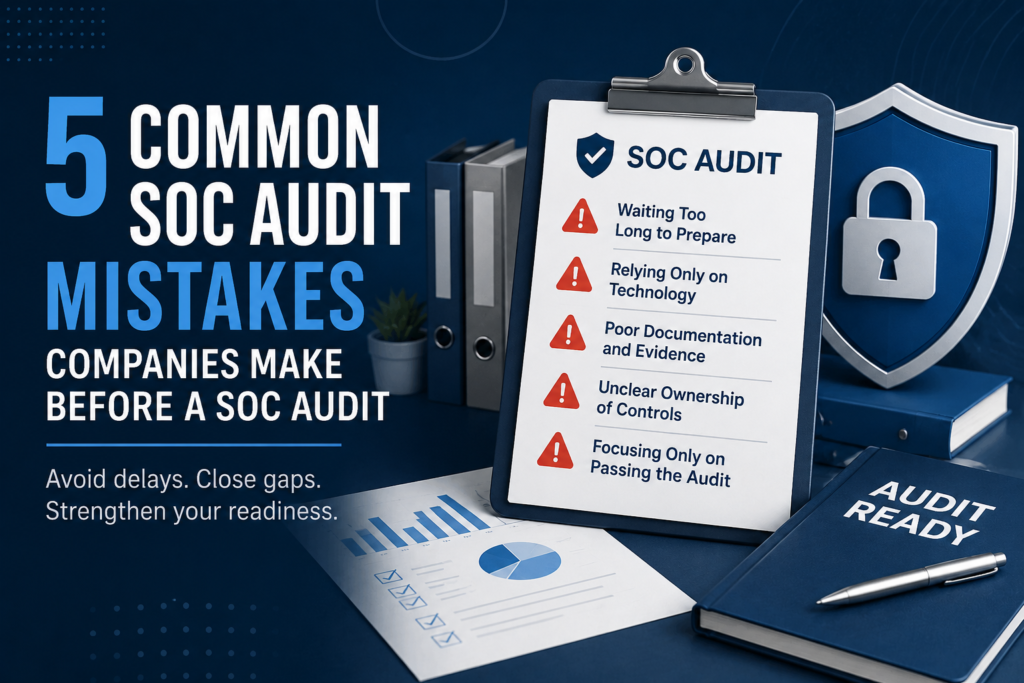
Here are five of the most common mistakes companies make before a SOC audit and how to avoid them.
1. Waiting Too Long to Prepare
One of the biggest mistakes organizations make is treating SOC preparation as a last-minute project.
Many companies begin thinking seriously about SOC compliance only after a customer requests it during procurement or contract negotiations. By that point, there may not be enough time to properly document controls, collect evidence, or address operational gaps.
SOC readiness works best when approached proactively rather than reactively.
2. Assuming Technology Alone Solves Compliance
Compliance platforms and automation tools can be extremely helpful, but they do not replace actual controls, governance, or operational discipline.
A company may have modern security tools in place and still struggle during an audit if:
- processes are undocumented
- responsibilities are unclear
- evidence is inconsistent
- procedures are not being followed consistently
Technology supports compliance, but it does not create maturity by itself.
3. Poor Documentation and Evidence Collection
Controls are difficult to validate if there is little supporting evidence behind them.
Organizations commonly struggle with:
- incomplete policies
- inconsistent change tracking
- missing onboarding or offboarding records
- lack of approval documentation
- weak audit trails
Good operational practices are important, but auditors also need evidence that those practices are actually occurring.
4. Unclear Ownership of Controls
SOC readiness involves more than IT teams alone.
Areas such as HR, operations, leadership, vendor management, and security often all play a role in maintaining controls. Problems occur when nobody clearly owns specific responsibilities.
Successful organizations typically assign:
- control owners
- review responsibilities
- approval authority
- evidence collection procedures
Clear accountability makes the process significantly smoother.
5. Focusing Only on Passing the Audit
The strongest SOC environments are not built around simply “passing.”
Organizations gain the most value when readiness efforts also improve:
- operational consistency
- risk management
- internal accountability
- customer confidence
- security maturity
A SOC engagement should support stronger business operations, not just produce a report.
Final Thoughts
SOC audits become much more manageable when organizations approach readiness intentionally and early.
Most major audit issues do not come from a complete lack of controls. They usually come from inconsistent processes, unclear ownership, or poor preparation.
A structured readiness process helps organizations reduce surprises, improve efficiency, and approach the audit with greater confidence.