Intro
Many organizations begin thinking about SOC compliance only after a customer asks for it during procurement or vendor review. At that point, the focus often shifts immediately to the audit itself.
However, one of the most important parts of a successful SOC engagement happens before the audit ever begins: readiness.
SOC readiness helps organizations identify gaps, improve processes, strengthen documentation, and prepare for a smoother and more effective audit experience.
What Is SOC Readiness?
SOC readiness is the process of evaluating your organization’s current controls, policies, systems, and operational practices before undergoing a formal SOC examination.
The goal is to determine:
- what controls already exist
- where gaps may be present
- what improvements are needed
- how prepared the organization is for an audit
Rather than discovering problems during the examination itself, readiness work helps organizations address issues proactively.
SOC readiness efforts are often aligned with guidance from the AICPA Trust Services Criteria to help organizations improve control maturity and operational consistency before an audit begins.
Why Readiness Matters
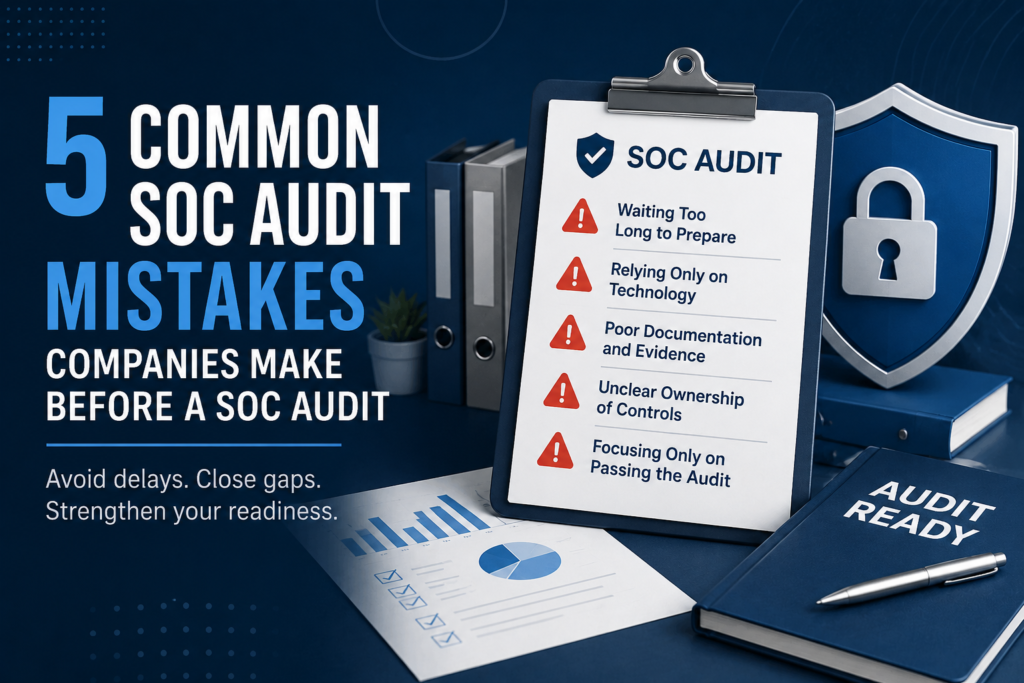
Many SOC audit challenges are not caused by a complete lack of security or operational controls. Instead, problems often come from inconsistent processes, weak documentation, unclear ownership, or missing evidence.
Readiness helps organizations:
- reduce audit surprises
- improve operational consistency
- clarify responsibilities
- strengthen documentation
- improve evidence collection
- prepare teams for the audit process
In many cases, readiness significantly reduces stress and inefficiency later in the engagement.
Common Areas Reviewed During Readiness
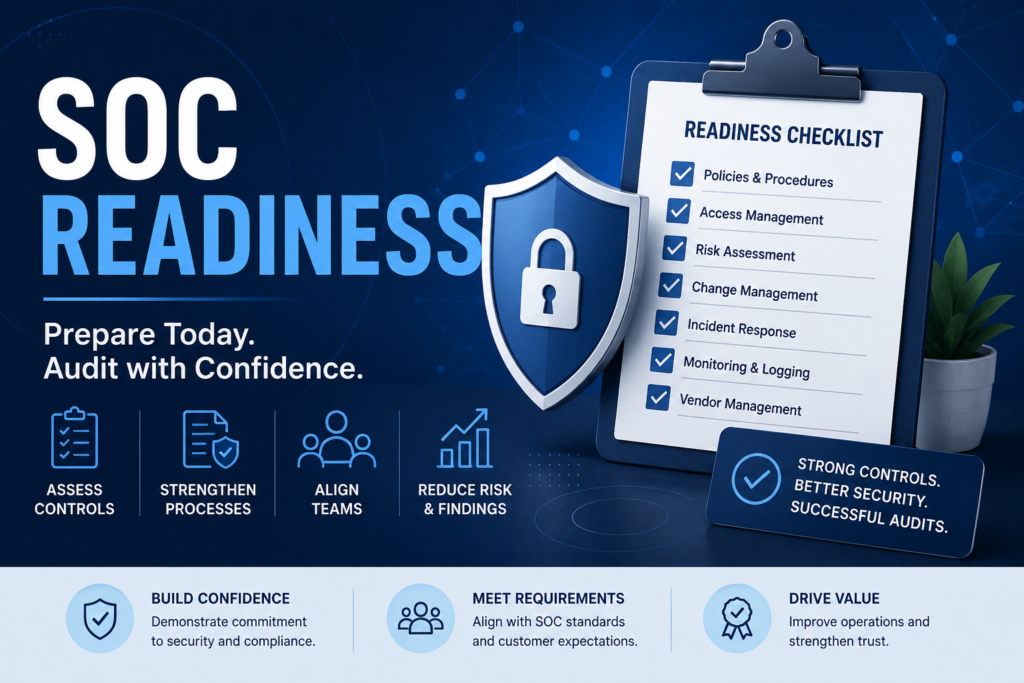
A readiness process often evaluates areas such as:
- access controls
- onboarding and offboarding
- change management
- risk assessments
- vendor management
- incident response
- backup and recovery procedures
- policy documentation
- logging and monitoring
The exact scope depends on the organization, systems involved, and the type of SOC engagement being pursued.
Readiness Is More Than Technology
One common misconception is that compliance readiness is only an IT or cybersecurity project.
In reality, SOC readiness often involves multiple areas of the organization, including:
- leadership
- HR
- operations
- security
- compliance
- vendor management
Technology tools are helpful, but readiness also depends heavily on governance, consistency, and operational discipline.
Final Thoughts
SOC readiness gives organizations the opportunity to strengthen controls and improve processes before entering a formal audit.
A structured readiness approach not only helps prepare for the examination itself, but can also improve operational maturity and customer confidence over time.
Organizations that prepare early are often better positioned for smoother audits and stronger long-term compliance outcomes.